What is Tai Chi?
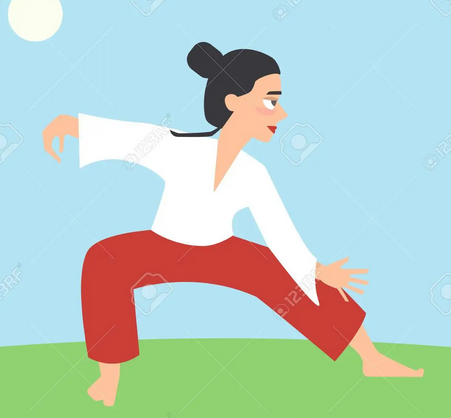 To most people, tai chi is the hand form exercise that one often sees being performed in parks. Its full name is tai chi chuan (chuan means fist). Tai chi chuan is a zero-impact exercise, comprising gentle moves, suitable for nearly everyone at every fitness level, including most persons with physical limitations.
No pain—no gain has no place in tai chi. Unlike other exercise forms where faster-faster and harder-harder are workout mantras, in tai chi chuan, every movement is slow, graceful and purposeful. Tai chi is not just an exercise; it is as much about the mind as it is the body.
The medical establishment is generally glowing about the benefits of practising tai chi chuan. Study after study has proved it to be valuable for establishing and maintaining good health and as a therapy for many ailments. The benefits include: better general health, lower cholesterol, increased immunity, decreased lower back pain, and better balance.
Tai chi chuan originated in China as a martial art related to kung fu around the 14th century. Since its emergence, it has evolved continuously into many styles. By far, the most widely known are Chen style and Yang style. Chen style is the oldest style still commonly practised, while Yang style is slower, with larger, flowing moves, and is the most common style taught in the West.
In the 1970s, Moy Lin Shin (1931–1998), a Taoist monk, moved to Canada, where he developed a new style, primarily derived from Yang style. Mr. Moy's style is the most common one taught in Canada today.